
Introduction
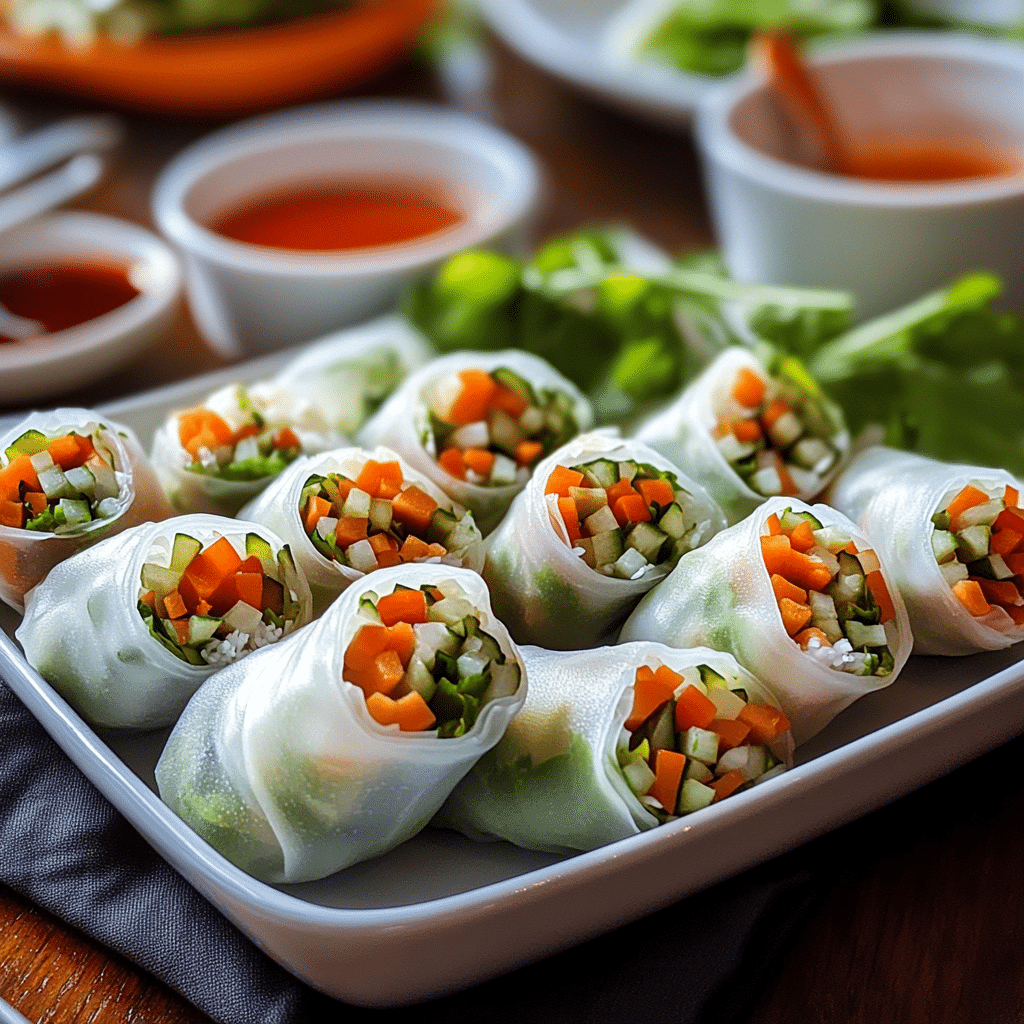
Vegetable spring rolls are a light, healthy, and delicious appetizer that have become a favorite in many cuisines, especially in Southeast Asia. These fresh, crispy rolls are filled with a variety of vibrant vegetables, herbs, and sometimes noodles, wrapped in a delicate rice paper wrapper. Whether you’re looking for a fresh snack, a starter for your dinner party, or a healthy addition to a meal, vegetable spring rolls are versatile, easy to make, and bursting with flavor.
The beauty of vegetable spring rolls lies in their adaptability. You can customize them with your favorite vegetables or dip them in a variety of sauces, such as peanut or hoisin sauce, for extra flavor. They’re a great vegetarian and vegan option for anyone seeking a light yet satisfying dish. Plus, the combination of fresh ingredients and crispy textures makes each bite incredibly refreshing.
Whether you’re a seasoned spring roll maker or a beginner, this recipe will guide you through the process of creating these delicious rolls that everyone will enjoy. So, roll up your sleeves, and let’s dive into making some fresh vegetable spring rolls!
Perfect for:
- Light appetizers or snacks
- Healthy meals or side dishes
- Vegan and vegetarian-friendly options
- Summer gatherings or picnics
- Family meals and gatherings
Why You’ll Love This Vegetable Spring Rolls Recipe
Here’s why vegetable spring rolls will become your go-to appetizer or snack:
- Fresh and Crunchy: The combination of fresh vegetables, crispy rice paper, and flavorful herbs creates a satisfying crunch in every bite.
- Healthy and Light: Packed with nutritious vegetables like carrots, cucumber, and lettuce, these spring rolls are low in calories, high in fiber, and full of vitamins.
- Quick and Easy: This recipe comes together quickly, requiring minimal preparation and cook time. Perfect for busy weeknights or when you need a healthy snack in a hurry.
- Customizable: You can customize the filling with any vegetables you like, or add extra ingredients like tofu, avocado, or rice noodles for variety.
- Perfect for Dipping: These rolls pair wonderfully with a range of dipping sauces, such as peanut sauce, hoisin sauce, or a simple soy sauce-based dip.
Preparation and Cooking Time
- Total Time: 30 minutes
- Preparation Time: 20 minutes
- Assembly Time: 10 minutes
- Servings: 10-12 spring rolls (depending on size)
- Calories per serving: Approximately 50-70 calories per roll (without sauce)
- Key Nutrients: Protein: 1g, Carbs: 10g, Fat: 1g, Fiber: 2g
Ingredients
Here’s what you’ll need to make these fresh and vibrant vegetable spring rolls:
- 10-12 rice paper wrappers (medium size)
- 1 cup shredded carrots
- 1 cup thinly sliced cucumber
- 1 cup red bell pepper, julienned
- 1 cup lettuce leaves, thinly sliced (or use baby spinach)
- ¼ cup fresh cilantro leaves
- ¼ cup fresh mint leaves (optional)
- 1 avocado, thinly sliced (optional)
- ½ cup cooked rice noodles (optional, for added texture)
- 1 tablespoon sesame oil or olive oil (for drizzling)
Ingredient Highlights
- Rice Paper Wrappers: These delicate wrappers are used to hold the fillings together and provide a chewy, slightly crispy texture when fried or fresh. They’re the key ingredient for making spring rolls.
- Vegetables: Fresh vegetables like carrots, cucumber, and bell peppers are used to provide crunch, sweetness, and nutrition. They add both flavor and color to the rolls.
- Herbs: Fresh cilantro and mint give the spring rolls a refreshing, aromatic flavor that elevates the entire dish.
- Avocado: Creamy avocado adds richness and smoothness to the rolls, making them extra satisfying.
- Rice Noodles: These optional noodles offer a chewy texture and help to fill out the rolls for a more substantial snack or meal.
Step-by-Step Instructions
Follow these simple steps to create the perfect vegetable spring rolls:
Prepare the Fillings
- Prep the Vegetables: Begin by washing and peeling (if necessary) the vegetables. Shred the carrots, thinly slice the cucumber, and julienne the red bell pepper. If you’re using avocado, slice it thinly. You can also prepare the herbs by plucking the leaves from the stems. Set all the ingredients aside in individual bowls for easy access during assembly.
- Cook Rice Noodles (Optional): If you’re using rice noodles, cook them according to the package instructions. Drain and rinse them with cold water to stop the cooking process. You can cut them into smaller lengths if desired. Set aside.
Prepare the Rice Paper Wrappers
- Soften the Rice Paper: Fill a shallow bowl with warm water (not too hot). Place one rice paper wrapper into the water and let it soak for about 10-15 seconds, or until it becomes soft and pliable. Be careful not to soak it for too long, as it can tear easily. Once softened, remove it from the water and place it on a clean, damp kitchen towel or a flat surface like a cutting board.
- Assemble the Spring Rolls: Place a small handful of the prepared vegetables, herbs, and rice noodles (if using) in the center of the rice paper wrapper. Be careful not to overfill, as this can cause the wrapper to tear. If you’re using avocado, add a few slices to the filling.
- Roll Up the Spring Roll: Fold in the sides of the rice paper, then carefully fold the top and bottom to encase the filling. Gently roll it up, starting from the bottom, making sure the roll is tightly sealed. Be gentle while rolling, as the rice paper can tear if handled roughly.
Repeat the Process
- Repeat: Continue the process until all the ingredients are used up, ensuring that each roll is tightly wrapped and filled with a colorful mix of vegetables and herbs.
Serve and Garnish
- Serve the Spring Rolls: Arrange the finished spring rolls on a plate. You can cut them in half on a slight diagonal for an attractive presentation. Garnish with extra cilantro or mint leaves for added color and freshness.
- Serve with Dipping Sauce: Serve the spring rolls with your choice of dipping sauces, such as peanut sauce, hoisin sauce, or soy sauce-based dipping sauce. You can also drizzle a little sesame oil over the rolls for extra flavor.
How to Serve Vegetable Spring Rolls
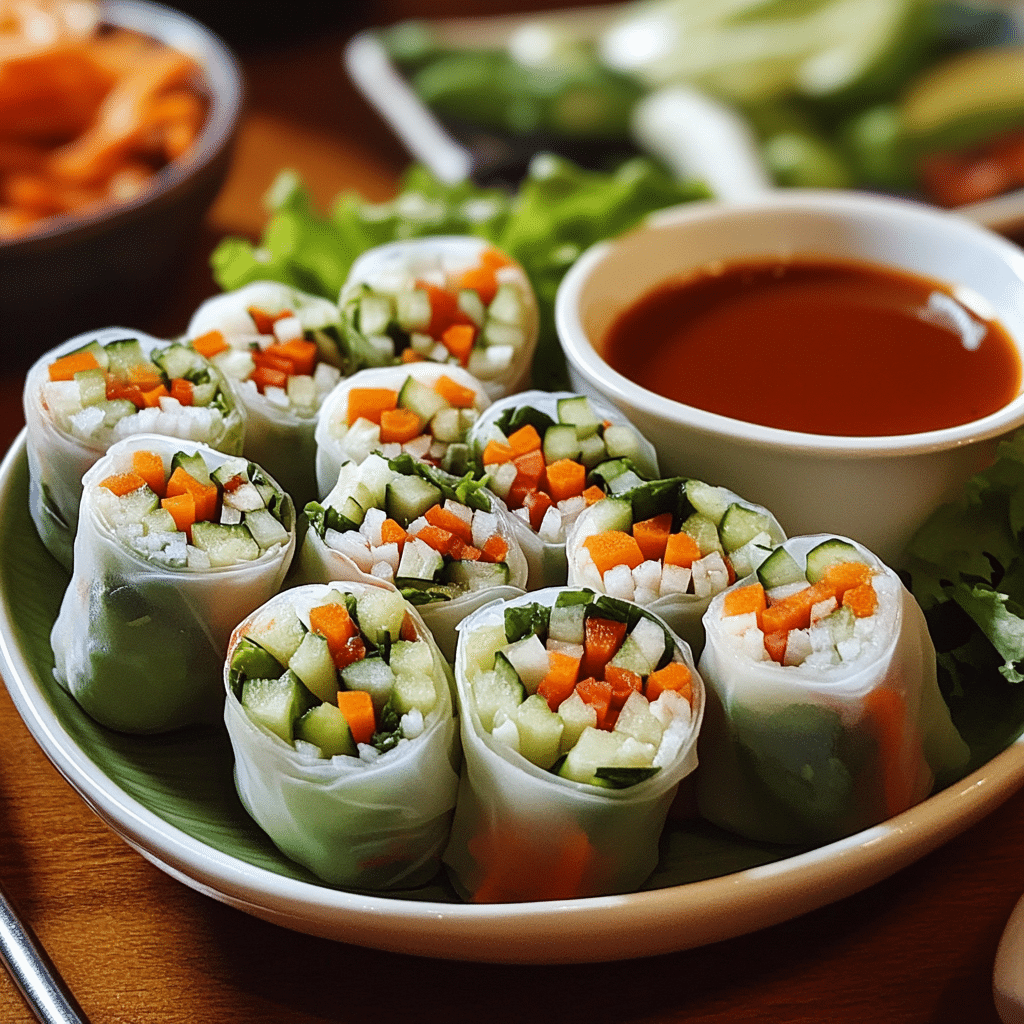
Vegetable spring rolls are perfect as appetizers, snacks, or light meals. Here are some ideas for serving them:
- With Dipping Sauces: These rolls are delicious when dipped in peanut sauce, hoisin sauce, or a tangy soy-based dipping sauce. The sauce complements the fresh vegetables and adds a layer of richness to each bite.
- As a Meal: Serve them as a light lunch or dinner. Pair the spring rolls with a side of rice or a fresh salad for a complete meal.
- For Parties or Gatherings: Vegetable spring rolls are great for parties, picnics, or potlucks. They can be served alongside other appetizers like dumplings, satay, or sushi rolls.
- For Meal Prep: These rolls are also fantastic for meal prep! You can make a batch ahead of time, store them in an airtight container, and enjoy them for a healthy lunch throughout the week.
Additional Tips for Vegetable Spring Rolls
Here are some tips to help make your vegetable spring rolls even better:
- Don’t Overfill the Rolls: It’s tempting to stuff the spring rolls, but be careful not to overfill them, as it will make rolling difficult and may cause the rice paper to tear. Keep the filling light and balanced.
- Work Quickly with Rice Paper: Rice paper can dry out quickly, so work quickly when soaking and wrapping the rolls. Make sure to keep the wrappers covered with a damp towel if you’re not assembling them immediately.
- Use Fresh Ingredients: For the best flavor and texture, use fresh vegetables and herbs. Avoid using ingredients that are wilty or overripe, as they can affect the overall taste and texture of the rolls.
- Add Protein (Optional): If you want to add more protein to your rolls, consider adding cooked shrimp, tofu, or even shredded chicken for a heartier meal.
- Keep the Rolls Moist: If you’re not serving the rolls immediately, wrap them tightly in plastic wrap or store them in an airtight container to prevent them from drying out.
Recipe Variations of Vegetable Spring Rolls
Here are 10 variations of vegetable spring rolls that you can try:
- Tofu Spring Rolls: Add crispy, pan-fried tofu to the filling for a protein-packed version of vegetable spring rolls.
- Shrimp Spring Rolls: Add cooked shrimp for a seafood twist that pairs perfectly with the fresh vegetables.
- Avocado Spring Rolls: Incorporate more avocado for a creamy texture that complements the crunchy vegetables.
- Mango and Veggie Spring Rolls: Add thin slices of fresh mango for a touch of sweetness and tropical flavor.
- Spicy Spring Rolls: Add chili peppers or a drizzle of sriracha sauce to the filling for a spicy kick.
- Herbed Spring Rolls: Experiment with different herbs, such as basil, parsley, or Thai basil, to customize the flavor of your rolls.
- Peanut Butter Spring Rolls: Spread a thin layer of peanut butter on the rice paper wrapper before adding the vegetables for an extra rich flavor.
- Pickled Veggie Spring Rolls: Use pickled vegetables, such as carrots or radishes, for a tangy, zesty filling.
- Rice Paper and Lettuce Rolls: Instead of using rice noodles, wrap your vegetables in lettuce leaves for an even lighter option.
- Grilled Vegetable Spring Rolls: Grill your vegetables lightly for a smoky flavor that contrasts nicely with the freshness of the raw veggies.
Freezing and Storage for Vegetable Spring Rolls
- Freezing: You can freeze vegetable spring rolls for up to 1 month. Place the rolled spring rolls on a baking sheet in a single layer, then freeze. Once frozen, transfer them to a ziplock bag or airtight container. To reheat, bake them in the oven at 375°F (190°C) for about 10-12 minutes or until heated through and crispy.
- Storage: If you plan to eat the rolls within a day or two, store them in an airtight container in the refrigerator. They are best enjoyed fresh, but can be kept in the fridge for up to 2 days. To prevent the rolls from drying out, cover them with a damp cloth or paper towel.
Special Equipment for Vegetable Spring Rolls
Here are some helpful items for making vegetable spring rolls:
- Shallow Bowl: A shallow bowl for soaking the rice paper wrappers is essential to prevent them from getting too wet or too dry.
- Cutting Board and Knife: A sharp knife is necessary to slice the vegetables evenly and make the rolling process easier.
- Damp Towels: Use damp towels to cover the rice papers while you work to prevent them from drying out.
FAQ Section about Vegetable Spring Rolls
- Can I use store-bought spring roll wrappers instead of rice paper? Yes, store-bought spring roll wrappers (often made from wheat) can be used for frying. However, rice paper is the traditional choice for fresh, non-fried spring rolls.
- How do I prevent the rice paper from sticking? Make sure the rice paper wrappers are soaked properly and that you assemble the rolls on a clean, damp surface to avoid them sticking.
- Can I make these spring rolls in advance? You can prepare the rolls ahead of time and store them in the fridge, but it’s best to eat them within 24 hours to maintain their freshness and texture.
- Can I fry vegetable spring rolls? Yes, you can deep-fry vegetable spring rolls for a crispy, golden exterior. Simply heat oil in a deep pan and fry the rolls until golden brown.
- Can I add fruit to the rolls? Yes! Fruits like mango, pineapple, or even strawberries can be added for a sweet and refreshing twist on the traditional vegetable spring rolls.
Vegetable Spring Rolls
- Total Time: 30 minutes
Ingredients
Here’s what you’ll need to make these fresh and vibrant vegetable spring rolls:
- 10–12 rice paper wrappers (medium size)
- 1 cup shredded carrots
- 1 cup thinly sliced cucumber
- 1 cup red bell pepper, julienned
- 1 cup lettuce leaves, thinly sliced (or use baby spinach)
- ¼ cup fresh cilantro leaves
- ¼ cup fresh mint leaves (optional)
- 1 avocado, thinly sliced (optional)
- ½ cup cooked rice noodles (optional, for added texture)
- 1 tablespoon sesame oil or olive oil (for drizzling)
Ingredient Highlights
- Rice Paper Wrappers: These delicate wrappers are used to hold the fillings together and provide a chewy, slightly crispy texture when fried or fresh. They’re the key ingredient for making spring rolls.
- Vegetables: Fresh vegetables like carrots, cucumber, and bell peppers are used to provide crunch, sweetness, and nutrition. They add both flavor and color to the rolls.
- Herbs: Fresh cilantro and mint give the spring rolls a refreshing, aromatic flavor that elevates the entire dish.
- Avocado: Creamy avocado adds richness and smoothness to the rolls, making them extra satisfying.
- Rice Noodles: These optional noodles offer a chewy texture and help to fill out the rolls for a more substantial snack or meal.
Instructions
Prepare the Fillings
- Prep the Vegetables: Begin by washing and peeling (if necessary) the vegetables. Shred the carrots, thinly slice the cucumber, and julienne the red bell pepper. If you’re using avocado, slice it thinly. You can also prepare the herbs by plucking the leaves from the stems. Set all the ingredients aside in individual bowls for easy access during assembly.
- Cook Rice Noodles (Optional): If you’re using rice noodles, cook them according to the package instructions. Drain and rinse them with cold water to stop the cooking process. You can cut them into smaller lengths if desired. Set aside.
Prepare the Rice Paper Wrappers
- Soften the Rice Paper: Fill a shallow bowl with warm water (not too hot). Place one rice paper wrapper into the water and let it soak for about 10-15 seconds, or until it becomes soft and pliable. Be careful not to soak it for too long, as it can tear easily. Once softened, remove it from the water and place it on a clean, damp kitchen towel or a flat surface like a cutting board.
- Assemble the Spring Rolls: Place a small handful of the prepared vegetables, herbs, and rice noodles (if using) in the center of the rice paper wrapper. Be careful not to overfill, as this can cause the wrapper to tear. If you’re using avocado, add a few slices to the filling.
- Roll Up the Spring Roll: Fold in the sides of the rice paper, then carefully fold the top and bottom to encase the filling. Gently roll it up, starting from the bottom, making sure the roll is tightly sealed. Be gentle while rolling, as the rice paper can tear if handled roughly.
Repeat the Process
- Repeat: Continue the process until all the ingredients are used up, ensuring that each roll is tightly wrapped and filled with a colorful mix of vegetables and herbs.
Serve and Garnish
- Serve the Spring Rolls: Arrange the finished spring rolls on a plate. You can cut them in half on a slight diagonal for an attractive presentation. Garnish with extra cilantro or mint leaves for added color and freshness.
- Serve with Dipping Sauce: Serve the spring rolls with your choice of dipping sauces, such as peanut sauce, hoisin sauce, or soy sauce-based dipping sauce. You can also drizzle a little sesame oil over the rolls for extra flavor.
- Prep Time: 20 minutes
- Cook Time: 10 minutes
Nutrition
- Serving Size: 10-12
- Calories: 50-70
- Fat: 1g
- Carbohydrates: 10g
- Fiber: 2g
- Protein: 1g
Conclusion
Vegetable spring rolls are a fresh, healthy, and customizable dish that will delight anyone who tries them. With their crisp, tender texture and vibrant vegetable fillings, they make the perfect appetizer, snack, or light meal. Whether you’re hosting a gathering or simply preparing a quick snack, these spring rolls are a crowd-pleaser. Experiment with different variations, and enjoy these deliciously light and satisfying rolls!